


TORO

Fountain


_HEIC.png)
Costarelle


Chiesa Del SS. Salvatore
The Church of the Holy Saviour in Toro is a stunning symbol of resilience. After the devastating Saint Anne’s earthquake of 1805, which destroyed the village and claimed 300 lives, the people of Toro rebuilt everything from the ground up, without any outside aid.
Led by Francesco Fagnani, a talented architect and builder, the reconstruction of the church took 23 years and was completed in 1828. Today, it stands as a majestic reminder of the town’s courage and determination, making it one of the most important churches in Molise.


Ponte Romano
The Ponte di Toro is a perfectly preserved Roman humpback bridge over the Tappino stream, set in a picturesque plain surrounded by towering poplars. This spot is a local favorite for picnics and summer events, blending history with natural beauty.
Each year, the people of Toro honor their town’s heritage with a community walk from the village to the bridge, cleaning and celebrating the area as they go. Visiting the Ponte di Toro offers a glimpse into both ancient history and the modern traditions that keep Toro’s spirit alive.


Cappella San Rocco
Nestled just outside the walls of Toro, the tiny Chapel of San Rocco has stood since 1605, resting quietly on a sandstone rock. One summer in 1985, something incredible happened at the Chapel of San Rocco. The statue of Saint Rocco had been removed for restoration work. As a religious procession passed by, people noticed something strange in the empty niche. When they looked closer, they saw the face and body of Jesus, appearing as if in deep suffering.
Word spread like wildfire, drawing visitors from across Molise and beyond. Newspapers, radio, and TV stations picked up the story, and the quiet little chapel became a center of attention. But as the restoration work finished and the statue of Saint Rocco returned to its place, the excitement faded, leaving behind only memories of a moment that seemed touched by the divine.
In the last picture, you can see a postcard that depicts the historical chapel of San Rocco as it appeared before its most recent restoration, completed in 1987. Additionally, since 2004 visitors can admire its unique bronze door.


Rua Scimmia
Literally translated: "Monkey Alley". It earned its quirky name, perhaps because its narrow spaces, especially at the steep exit at the bottom, which seems suited for the agility of a monkey. Unlike many other streets in the town, which are named after the families who once lived there, Monkey Alley stands out with its playful and intriguing title.
This little street is a hidden gem, offering a glimpse into the town’s unique character and history, perfect for curious explorers and lovers of offbeat stories.


Convento
A beautifull convent on the top of the hill.


Costarelle
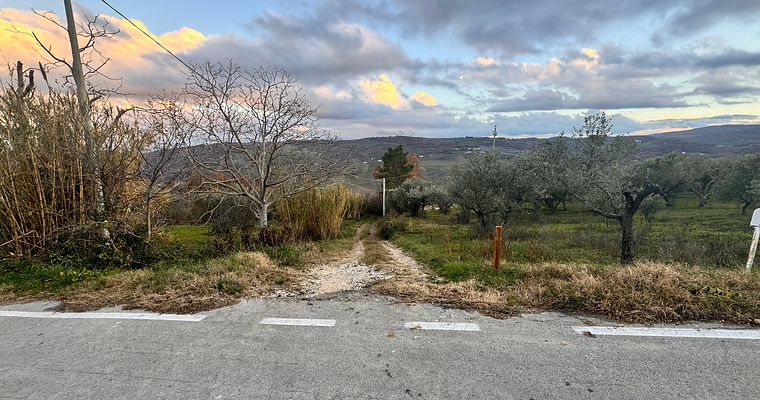
Long ago, roads were designed with lots of twists and turns because the hills were too steep for donkeys to climb straight up. When the incline was too sharp, the donkeys would stop, so people had to make the roads wind around the hills instead. Today, these unpaved paths, called costarelle, are often used as shortcuts.
_HEIC.png)

Food & Drinks
1. Pizzeria Roma
A local bar and pizzeria where you can go for amazing freshly baked oven pizza's, a drink or for a good chat.


2. Civicio 47
Back from being away! The bar offers seating both in- as outside. Not only can you enjoy a refhresing drink here, but there are also amazing pizza's for when you're getting a little hungry.

